

how to introduce eggs to your baby
Eggs for babies. When and how to introduce them safely.
If there’s one food that sends parents into a slight panic, it’s eggs. Trust me, I get it! For years we were told to hold off on common allergens like eggs and peanuts, so it feels almost backwards to hear the opposite now.
But guess what? Research has flipped the script. Introducing eggs early in your baby’s first year may actually help lower their risk of developing an egg allergy, not raise it. That’s why the American Academy of Pediatrics (AAP), the USDA Dietary Guidelines, and allergy experts now all agree that earlier is better than later.
So let’s break it all down together: when to start, how to introduce eggs safely, what allergy symptoms to keep an eye on, and easy ways to serve eggs to your little one.

Why Are Eggs Important for Babies?
Eggs are one of the most nutrient-dense foods you can offer. They provide:
- High-quality protein – provides all the essential amino acids needed to support your baby’s rapid growth and development.
- Choline for brain development – a nutrient many parents haven’t heard of but one that’s incredibly important for a baby’s growing brain. Eggs are one of the easiest and most concentrated sources.
- Vitamin B12 – supports healthy brain development, red blood cell production, and nervous system function.
- Selenium – acts as an antioxidant that helps protect cells and supports immune and thyroid health.
- Iodine – essential for healthy growth and brain development, especially during the first years of life.
- Healthy fats – provide energy and help support brain development while also aiding the absorption of certain vitamins.
- Iron (especially when paired with iron-rich foods) – supports healthy growth and brain development and helps prevent iron deficiency, one of the most common nutrient deficiencies in infancy.
They’re also versatile, affordable, and easy to serve in baby-friendly forms.
When Can Babies Have Eggs?
Current recommendations suggest introducing eggs around 6 months of age, once your baby is developmentally ready for solid foods. For some babies at higher risk of allergies, introduction may begin between 4 and 6 months under guidance from their healthcare provider.
Signs of readiness include:
- Sitting with minimal support
- Good head and neck control
- Bringing objects to mouth
- Interest in food
- Loss of tongue-thrust reflex
Does Early Egg Introduction Prevent Egg Allergy?
Several studies have found that introducing cooked egg during infancy is associated with a lower risk of developing egg allergy. The PETIT study, one of the landmark studies in this area, found that infants who regularly consumed heated egg were less likely to develop egg allergy than those who avoided it. Researchers have since looked at the results from multiple studies and found similar results, further supporting the idea that introducing eggs during infancy may help reduce the risk of egg allergy.
Now here’s an important piece of the puzzle that often gets overlooked! Introducing eggs is only the first step. Early introduction matters, but ongoing exposure matters too. Introducing egg once and never serving it again isn’t enough. Research suggests ongoing exposure helps maintain tolerance. All this to say, introduce early AND often.
Should High-Risk Babies Introduce Eggs Earlier?
A baby may be considered higher risk if they have:
- Moderate to severe eczema
- Existing food allergy
- A sibling with food allergies
- Strong family history of allergic disease
For babies with eczema, early introduction of cooked egg may be especially beneficial. Be sure to discuss timing with your pediatrician or allergist!
What Does an Egg Allergy Reaction Look Like?
Most reactions happen within minutes to a couple of hours after eating.
Possible symptoms include:
Mild Symptoms:
- Hives
- Red rash around the mouth
- Itchy skin
- Mild swelling of lips or face
More Serious Symptoms:
- Repeated vomiting
- Significant swelling
- Difficulty breathing
- Wheezing
- Lethargy
- Pale or floppy appearance
Seek immediate medical care for any signs of breathing difficulty or severe reaction. A baby may be considered higher risk if they have:
- Moderate to severe eczema
- Existing food allergy
- A sibling with food allergies
- Strong family history of allergic disease
For babies with eczema, early introduction of cooked egg may be especially beneficial. Be sure to discuss timing with your pediatrician or allergist!
What Type of Egg Should You Start With?
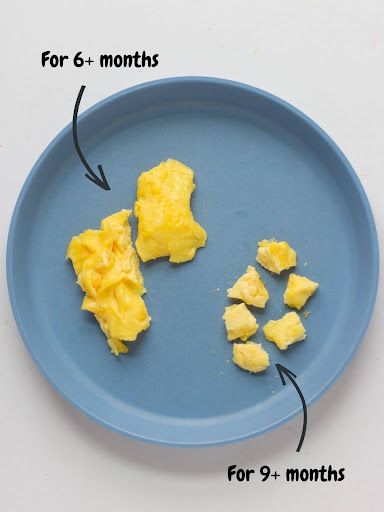
Current guidance recommends starting with well-cooked egg, not raw or undercooked egg. Good first options include:
- Hard-boiled egg – mash with breast milk, formula, avocado, sweet potatoes, or hummus for a softer texture.
- Scrambled eggs
- Omelet strips
- Egg mixed into oatmeal
- Pancakes and waffles – Once egg has been successfully introduced on its own, these can be made with egg can be another easy way to keep it in your baby’s regular rotation. Here are my top pancakes for babies
- Baked goods – muffins, quick breads, and other baked goods containing egg can help provide ongoing exposure while adding variety to your baby’s diet. Try these delicious and nutrient dense muffins for babies.
- Egg muffins
Once your baby is tolerating eggs, variety is key! Here are some easy egg recipes for babies, plus tips on how to safely serve them from 6 months and beyond. Avoid runny yolks, soft-boiled eggs, raw batter, and homemade mayonnaise.
How to Introduce Eggs for the First Time
Step 1: Choose a time when your baby is health
Avoid introducing eggs when your baby is sick or right before bedtime. Instead, choose a time earlier in the day when you can easily monitor for any reactions.
Step 2: Start small
Offer a tiny amount of well-cooked egg, such as a small bite of scrambled egg or omelet. When introducing eggs for the first time, avoid offering any other new allergens that day. This way, if a reaction does occur, you’ll know which food was responsible.
Step 3: Observe
Keep an eye on your baby for signs of an allergic reaction. While reactions can occasionally occur later, most happen within the first 2 hours after eating the food.
Step 4: Gradually increase
If your baby tolerates the initial taste without any signs of a reaction, there’s no need to keep offering only tiny amounts. Over the next several exposures, gradually increase the portion size until eggs become a regular part of your baby’s meals. This might look like progressing from a small bite of scrambled egg to a few spoonfuls, and eventually to a full serving appropriate for your baby’s appetite.
Remember that the goal isn’t to get your baby to eat a specific amount right away. It’s simply to continue offering eggs in a comfortable, age-appropriate way while watching your baby’s cues.
Step 5: Keep serving regularly
As mentioned earlier, introducing egg isn’t a one-and-done event. Once your baby has tolerated egg, try to keep it in your regular meal rotation. There’s no magic number, but offering egg a few times each week is a practical goal for many families. And don’t stress if you miss a week here and there. The goal is never perfection. it’s making eggs a normal, familiar part of your baby’s diet over time.
Final Takeaway
So let’s bring this all together! Research is clear! Introducing well-cooked eggs around 6 months and then keeping them in the regular rotation can actually help lower your baby’s risk of developing an egg allergy. Plus, eggs are a fantastic source of nutrients for all that growth and development happening at this stage.
So instead of holding off on eggs “just in case,” you need to bring them in early and keep them around. It’s one less thing to worry about, and a pretty easy win for your baby’s diet.