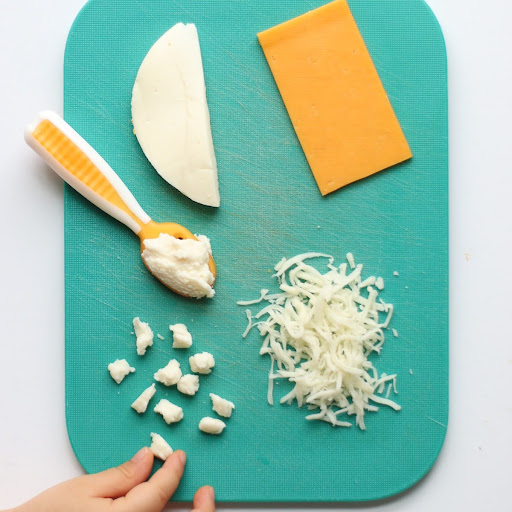

How To Introduce Dairy To Your Baby
Yogurt, cheese, milk…dairy brings up a lot of “wait, is this okay?” moments for parents introducing solids. And it’s a fair question, especially since cow’s milk as a drink should wait until after your baby’s first birthday, but yogurt and cheese can be offered once your baby is ready for solids.
Here’s some good news to ease the overwhelm! Research now points toward introducing allergens early, including eggs (link to the blog post) and dairy, rather than playing the waiting game. Early introduction may actually help lower your baby’s risk of a milk allergy, and dairy also packs in nutrients your baby needs for healthy growth.
In this guide, I’ll walk you through when to introduce dairy, the best first dairy foods, signs of an allergic reaction, and simple ways to keep dairy in your baby’s diet once it’s been introduced.
Why Dairy is Great for Babies
Dairy foods offer several important nutrients for growing babies, including:
- High-quality protein – supports healthy growth and muscle development.
- Calcium – helps build strong bones and teeth.
- Vitamin D (when fortified) – works with calcium to support bone health and immune function.
- Vitamin B12 – supports brain development and healthy red blood cells.
- Healthy fats (in whole-fat dairy products) – provide energy and support brain development during the first two years.
- Probiotics (in yogurt with live cultures) – may help support a healthy gut microbiome.
Dairy is also incredibly versatile and easy to include in family meals.
When Can Babies Have Dairy?
You can begin introducing dairy-containing foods around 6 months of age, once your baby is developmentally ready for solids. However, it’s important to distinguish between cow’s milk as a drink and cow’s milk as an ingredient in foods.

Dairy Foods Babies CAN Have Before Age 1
- Plain whole milk yogurt
- Ricotta cheese
- Full-fat cheeses
- Cow’s milk used in cooking
- Baked goods containing milk
These supports are not about “lowering the bar”—they help kids with ADHD work with their learning style instead of against it.
Cow's Milk Babies Should NOT Drink Before Age 1
Whole cow’s milk should not replace breast milk or formula before 12 months because it doesn’t provide the right balance of nutrients for infants and can increase the risk of iron deficiency.
Does Early Dairy Introduction Help Prevent Milk Allergy?
Research suggests that introducing cow’s milk protein during infancy, rather than delaying it, may help support tolerance in many babies. Current infant feeding guidelines recommend introducing common allergens, including dairy, during the first year of life.
Like other allergens, introducing dairy once isn’t the end of the story. Once your baby has tolerated dairy, keep offering it regularly.
Remember, the goal is NEVER perfection. It’s CONSISTENCY over time.
How to Introduce Dairy
Step 1: Choose a time when your baby is healthy
Avoid introducing dairy when your baby is sick or right before bedtime. Instead, offer it earlier in the day when you can easily monitor for any signs of an allergic reaction.
Step 2: Start small
Offer a small amount of a simple dairy food, such as plain whole milk yogurt or cottage cheese. When introducing dairy for the first time, avoid offering any other new allergens that day. This way, if a reaction does occur, you’ll know which food was responsible.
Step 3: Observe
Keep an eye on your baby for signs of an allergic reaction. While reactions can occasionally occur later, most happen within the first 2 hours after eating the food. Watch for symptoms such as hives, swelling, vomiting, coughing, wheezing, or changes in behavior.
Step 4: Gradually increase
If your baby tolerates the initial taste without any signs of a reaction, there’s no need to keep offering only tiny amounts. Over the next several exposures, gradually increase the portion size until dairy becomes a regular part of your baby’s meals. This might look like progressing from a spoonful of yogurt to a larger serving or incorporating dairy into other foods, such as oatmeal, smoothies, or family meals.
Remember that the goal isn’t to get your baby to eat a specific amount right away. It’s simply to continue offering dairy in age-appropriate forms while following your baby’s hunger and fullness cues.
Step 5: Keep serving regularly
As mentioned earlier, introducing dairy isn’t a one-and-done event. Once your baby has tolerated dairy, try to keep it in your regular meal rotation. There’s no magic number, but offering dairy foods like yogurt or cheese a few times each week is a practical goal for many families.
What If My Baby Gets a Rash Around Their Mouth?
A mild red rash around the mouth isn’t always a dairy allergy. It can happen from skin irritation, especially with foods like yogurt that come into contact with sensitive skin. Hives, swelling, vomiting, or breathing changes are more concerning signs of an allergic reaction.
Dairy Allergy vs. Lactose Intolerance
These two terms are often used interchangeably, but they’re actually very different.
Dairy (Milk) Allergy
- An immune system reaction to the proteins found in cow’s milk.
- Most commonly appears during infancy or early childhood.
- Symptoms can include hives, swelling, vomiting, wheezing, coughing, or difficulty breathing and may range from mild to severe.
- Because it involves the immune system, it can lead to a serious allergic reaction (anaphylaxis) in some cases.
Lactose Intolerance
- A digestive issue, not an allergy, caused by difficulty digesting lactose, the natural sugar found in milk.
- Rare in babies and young infants. It typically develops later in childhood or adulthood.
- Symptoms usually include gas, bloating, stomach cramps, and diarrhea after consuming dairy.
- While uncomfortable, lactose intolerance is not life-threatening and does not involve the immune system.
If your baby develops hives, swelling, vomiting, or trouble breathing after eating dairy, it’s more likely to be a milk allergy than lactose intolerance. If you’re concerned your baby is having an allergic reaction, stop offering the food and contact your pediatrician. Seek emergency medical care immediately if your baby has difficulty breathing, significant swelling, or other signs of a severe reaction.
Easy Dairy Meal Ideas
Yogurt-based
- Plain whole-milk yogurt mixed with mashed banana or pumpkin puree
- Yogurt dip with soft steamed veggie sticks (sweet potato, carrot, green beans)
- Yogurt swirled into cooled oatmeal
- Frozen yogurt bites (small dollops frozen on a tray) for teething relief
Cheese-based
- Shredded cheese melted into scrambled eggs
- Very thin slices or shredded cheese
- Ricotta mixed with mashed avocado or fruit
- Cheese melted over steamed veggies like broccoli or cauliflower
- Cheese pancakes
- Pizza quesadilla
- Veggie Mac and cheese
Milk as an ingredient (not a drink before age 1)
- Whole milk stirred into oatmeal, mashed potatoes, or pureed soups
- Pancakes or waffles made with whole milk in the batter
- Simple cream-based sauces mixed into pasta, like
- Muffins for babies
- Banana overnight oats
Quick Reminders
- Choose plain, unsweetened yogurt! Flavored versions have a lot of added sugars.
- Use whole milk (not skim or low-fat) – babies need the fat for brain development
- Avoid:
- Large cubes or chunks of cheese
- Thick cheese sticks
- Babybel-style rounds served whole or in large pieces
- Any firm cheese cut into coin-shaped pieces