

how to introduce peanuts and tree nuts to your baby
Okay, let’s talk about the peanut thing. I know it can feel scary. You’ve probably heard a hundred allergy horror stories. But here’s some good news! Giving your baby peanut early on, instead of avoiding it, may actually help lower their risk of an allergy, just like we talked about with eggs and dairy.
As a pediatric dietitian, I know this first taste feels huge. It’s not. Your baby doesn’t need to eat much, just enough for their immune system to say “oh, I know this one!”
And I’ve got you covered: when to introduce it, easy ways to serve it up, how much is enough, signs of a reaction, and how to keep it going after that first taste.
And a quick note! Tree nuts (like almond, cashew, and walnut) are also high-allergen foods, and the same early-introduction approach applies to them too. Once you’ve got the peanut basics down, you can use the same strategy to introduce tree nuts.
When Can Babies Eat Peanuts and Tree Nuts?
Current guidelines recommend introducing around 6 months of age, once your baby is developmentally ready for solids. Research shows that introducing peanut during infancy, rather than delaying it, may help reduce the risk of developing a peanut allergy in many babies.
Should My Baby Be Evaluated Before Trying Peanut?
Most babies can safely try peanuts and tree nuts at home.
However, talk with your pediatrician or an allergist first if your baby:
- Has severe eczema
- Has a known egg allergy
- Has had a previous allergic reaction to another food
They may recommend introducing under medical supervision.
Peanuts vs. Tree Nuts: What's the Difference?
This is one of the biggest points of confusion for parents.
Although they’re often talked about together, peanut and tree nuts are different allergens.
- Peanut is a legume, not a tree nut.
- Tree nuts include almonds, cashews, walnuts, pecans, pistachios, hazelnuts, Brazil nuts, macadamia nuts, and others.
Introducing peanut does NOT mean your baby has been introduced to tree nuts.
Do Tree Nuts Need to Be Introduced One at a Time?
YES! Unlike peanut, tree nuts aren’t one single food. They’re a group of different allergens. For that reason, it’s best to introduce each tree nut individually before moving on to the next (and I show you how to do this strategically in my 3 month meal plan program).
For example:
- Almond
- Cashew
- Walnut
- Pistachio
- Pecan
- Hazelnut
- Brazil nut
- Macadamia nut
Introducing them separately makes it much easier to identify which nut caused a reaction if one occurs. Once each tree nut has been tolerated on its own, you can continue offering them regularly and even use mixed nut butters containing only nuts your baby has already eaten safely.
Tip: You don’t have to introduce every tree nut in a short period of time. Work through them gradually over the coming weeks and months.
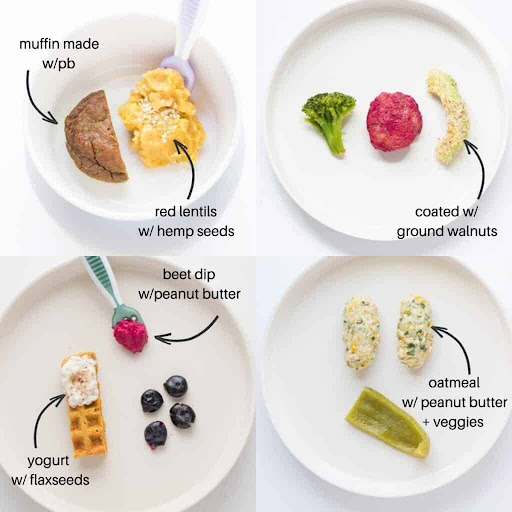
How to Serve Peanuts and Tree Nuts Safely
Never offer:
- Whole
- Chopped
- Thick spoonfuls of peanut or nut butter
These are choking hazards. Instead, try (going to use peanut as an example but you can also do this with treenuts):
- Peanut butter thinned with warm water, breast milk, or formula
- Peanut powder mixed into oatmeal or yogurt
- Peanut butter stirred into applesauce
- Peanut butter mixed into mashed banana
- Peanut butter spread thinly on toast strips
- Peanut sauce mixed into noodles
- Bamba peanut puffs (for babies ready for dissolvable finger foods)
How Much Should I Offer?
For the first introduction, offer a tiny amount, we’re talking 1/4 teaspoons of thinned peanut butter (or an equivalent amount of another peanut-containing food). Introduce earlier in the day, rather than right before nap or bedtime. That way, if your baby does have a reaction, you’re awake, alert, and able to get help quickly if needed.
Now start with a small taste and wait about 10 minutes. If your baby is doing well, continue offering the rest at their own pace. Don’t worry if they only eat a few bites. The goal is exposure, not finishing a serving. Most allergic reactions happen within minutes to two hours after eating the food.
Mild symptoms
- Hives
- Red rash
- Mild swelling around the lips or face
- Vomiting
Severe symptoms (Call 911 immediately)
- Difficulty breathing
- Wheezing
- Swelling of the tongue or throat
- Repeated coughing
- Pale or blue skin
- Extreme sleepiness or limpness
- Loss of consciousness
If your baby develops severe symptoms, seek emergency medical care immediately.
FAQs
Do I Need to Wait Three Days Before Introducing Another Allergen?
No. For most babies, there’s no need to wait three days between introducing each allergen. In fact, doing so can unnecessarily limit variety during this important window of food exploration.
Instead, introduce one allergen at a time so that if your baby has a reaction, it’s easier to identify the cause. Once an allergen is tolerated, continue offering it regularly while gradually introducing the other common allergens.
Should I Keep Offering?
YES and YES! Successfully introducing peanuts and tree nuts is just the first step.
To help maintain tolerance, continue offering them regularly as part of your baby’s diet. A practical goal for many families is about twice a week, though it doesn’t need to be on a strict schedule.
Can I introduce peanut if allergies run in my family?
Yes. A family history alone doesn’t mean you should delay peanut. Talk with your pediatrician if you’re unsure.
Can babies choke on peanut butter?
Yes, thick peanut butter is sticky and can be difficult to swallow. Always thin it before serving.
What if my baby refuses it?
That’s okay. Try again another day. It often takes multiple exposures before babies accept a new flavor.
Can I mix peanut with another food?
Yes! Mix it into foods your baby already tolerates like oatmeal, yogurt, or mashed fruit.
Peanut Serving Ideas
(feel free to swap with any tree nut)
- Peanut butter oatmeal
- Peanut butter yogurt
- Peanut butter chickpea cookies
- Pancakes dipped in thinned out peanut butter (here’s a collection of healthy baby pancakes)
- Peanut butter mixed into chia pudding
- Peanut butter vegetable waffles
- Peanut noodles
- Peanut butter on toast fingers
- Peanut butter mixed into mashed sweet potato
A baby may be considered higher risk if they have:
- Moderate to severe eczema
- Existing food allergy
- A sibling with food allergies
- Strong family history of allergic disease
For babies with eczema, early introduction of cooked egg may be especially beneficial. Be sure to discuss timing with your pediatrician or allergist!